Beyond the books: Brown students help bridge learning gaps in Providence
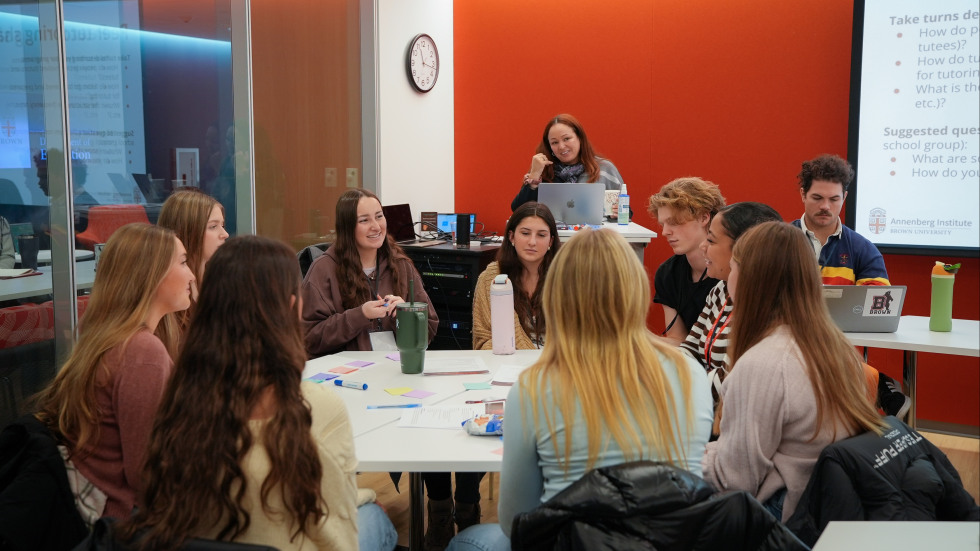
Despite recent gains, just under one-third of Rhode Island students are meeting grade-level expectations in math and reading. The Brown Tutoring Corps (BTC) is one of the programs helping bridge these gaps.
BTC began in 2022 as a partnership between the Annenberg Institute and the Swearer Center for Public Service, led by Brown student leaders, with the goal of providing high-impact, accessible tutoring to K-12 students across Rhode Island. The program was created as a direct response to the widespread learning gaps and disruptions caused by the COVID-19 pandemic.
Around this same time, multiple student-run groups, such as FLIP (Free Learning in Place), SAT Prep, Brown Elementary Afterschool Mentoring (BEAM), the Swearer Classroom Program, and others, were already providing tutoring and mentoring across Brown University. The creation of BTC unified these efforts into a single, coordinated response to the community’s call for support, aiming to help students recover to pre-pandemic levels through accelerated, consistent learning opportunities.
For Aarav Sundaresh, Annenberg’s Assistant Director for Engagement and Partnerships and BTC program director, “It’s a chance to connect university resources with community needs, as equitably and collaboratively as possible.”
The Annenberg Institute saw an opportunity to strengthen BTC using its research on high-impact tutoring. Annenberg’s research provided BTC with the structure and alignment it needed to evolve from the strong foundation students had created into a coordinated, data-informed effort capable of meaningfully accelerating learning recovery across Rhode Island.
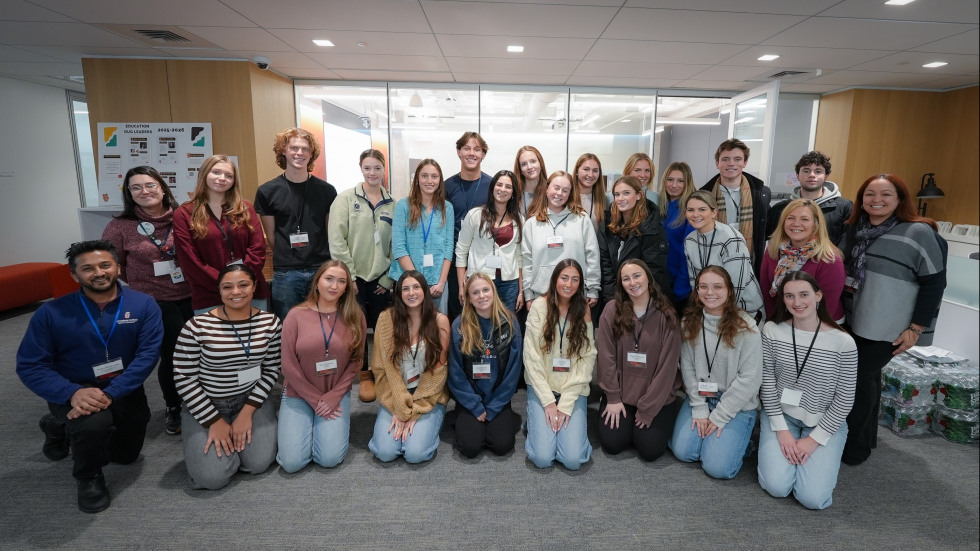
Dilania Inoa, Senior Manager of Community Partnerships at Swearer Center, who runs BTC with Aarav, oversees student-facing operations, including training, supervision and volunteer support, ensuring that every BTC tutor feels part of a cohesive network.
“ It’s a chance to connect university resources with community needs, as equitably and collaboratively as possible. ”
The impact of the Brown Tutoring Corps isn’t just measured in hours or test scores; it’s visible in the growth of both students and tutors. This past spring, BTC tutors provided roughly 1,300 hours of academic tutoring and 1,200 hours of mentoring.
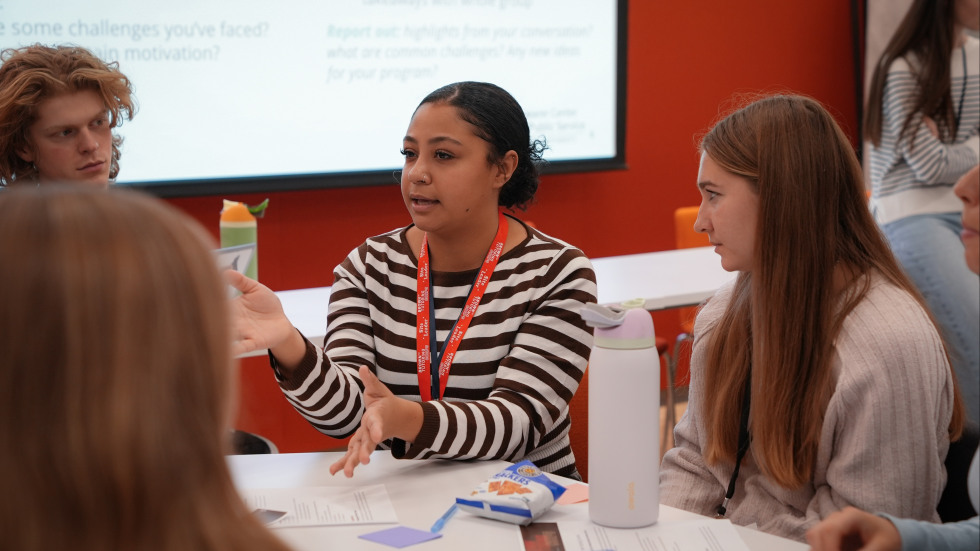
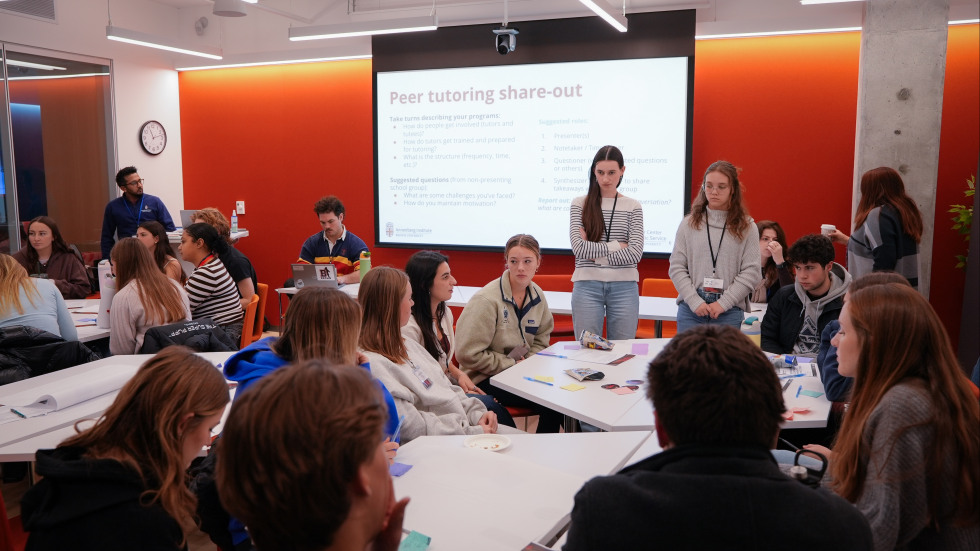
BTC tutors meet students either 1:1 or in small groups, typically over 10+ weeks, depending on the site’s needs. Before tutoring begins, all volunteers complete standardized training covering effective tutoring strategies, local context and research-backed practices for accelerating learning. Throughout the program, tutors are supported by not only BTC staff, but also by other Brown University students.
At each BTC site, site leaders such as Natalya Cabral, a Rhode Island native and a junior at Brown, guide volunteer tutors, coordinate tutor matches through the BTC Hub, and serve as liaisons to school staff and administration. “I love being a site leader,” she said. “BTC is a great way for Brown students to give back by providing direct support in the areas teachers at each site need help with. You’re really there for them.”
Working alongside site leaders is Kaushal Krishnamurthy, a junior at Brown University who began tutoring with BTC during his first semester on campus. “I knew I wanted to tutor in some capacity when I came to Brown, and BTC seemed like a great way to do that,” he explained. “Before BTC, I hadn’t worked outside my own community. Coming into a new community, having the site leaders guide me, showing me the bus route, walking me to the school, helped ease my nerves. It was rewarding to explore different parts of Providence and interact with the larger community.”
The Brown Tutoring Corps is an example of the importance of coordinated, community-driven solutions that support students not just in reaching grade-level benchmarks, but in shaping the pathways ahead of them.