Beyond the law: How Cat Gao ’27 is learning to advocate for others
Through an Arthur Liman Public Interest Fellowship, the senior gained firsthand experience in public defense, deepening her understanding of the legal system and reaffirming her commitment to criminal justice.
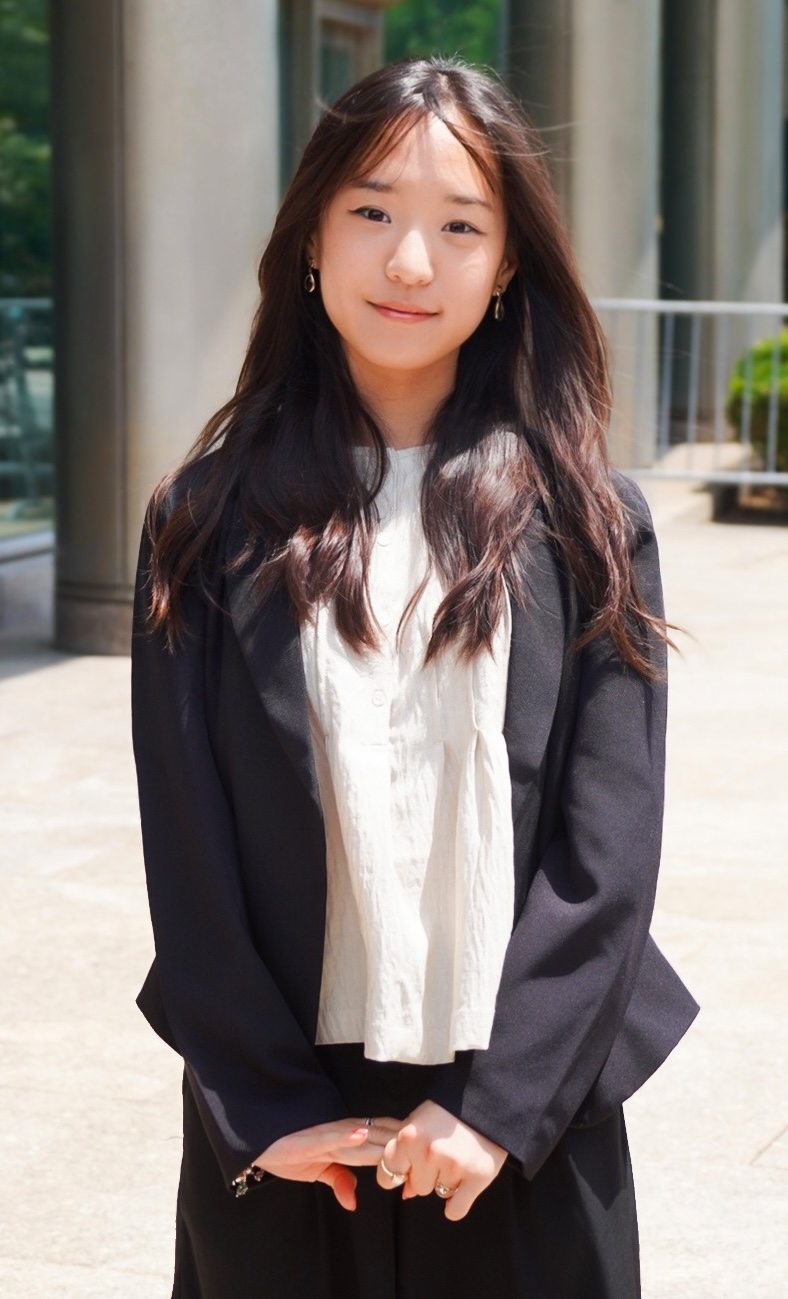
Cat Gao ’27 is a Social Innovation Fellow (SIF) from New York City, studying Philosophy and Literary Arts at Brown University. Her interests center on criminal, civil and family justice, with a particular focus on public defense. Through her leadership with the Brown Women’s Pre-Law Association and Stop Torture RI, as well as her work with the Rhode Island Supreme Court and Attorney General’s Office, Gao developed a commitment to public-interest law.
As an Arthur Liman Public Interest Fellow, she served as the first undergraduate intern with the Neighborhood Defender Service’s (NDS) Criminal and Family Defense Practice in Harlem, New York City. There, she supported defense attorneys in their casework and advocated for state legisl tion to protect parents with intellectual and developmental disabilities involved in the family court system, as well as survivors of harassment and abuse.
We interviewed Gao about her experiences with NDS and the connections she made between her legal fellowship and her own research at Brown as a Community Storyteller.
What inspired you to get involved with the Swearer Center?
I was new to Rhode Island when I arrived at Brown, but I soon recognized familiar parallels in the communities around me. Though Providence differs greatly from the metro New York neighborhoods I grew up around, from Queens to Manhattan, I saw close-knit immigrant communities, working families and people whose vibrancy and warmth reminded me of home.
Wherever I go, I want to get to know the people around me beyond my roles as a student or professional–as a neighbor and fellow community member. My work in the Attorney General’s Office and the Rhode Island Supreme Court introduced me to the state’s legal institutions, but I wanted to connect more directly with the people who live here and learn their lived experiences firsthand. I consider it a privilege to build relationships with people whose backgrounds and perspectives differ from my own and I have been grateful for the opportunity to do so in Rhode Island. To me, being a student at Brown also means being part of the wider Providence and Rhode Island community and I want to contribute to it in ways that extend beyond campus.
What did you learn working for NDS?
Working alongside criminal and family public defenders in my hometown was deeply meaningful. I finally had the chance to understand from the inside a legal system I had grown up around and to see how I could help use it to protect and support people in my own community. I learned about both the technical demands of criminal defense and the emotional weight of public interest lawyering. A client’s legal problems rarely exist in isolation; a criminal case may intersect with family, housing, or civil court proceedings, each carrying consequences for the client and their loved ones. I often found myself asking how I could ensure that every person I worked with received not just competent representation, but the most attentive and committed advocacy I could offer. Seeing the less visible parts of the work, like connecting clients with resources, supporting their families and simply being present as a shoulder to lean on during difficult moments, reaffirmed that this is the work I wanted to do.
My supervisors were the best role models. Watching them advocate so fiercely for our clients, many of whom were from marginalized backgrounds and had families depending on them, only strengthened my desire to pursue public interest law. As an undergraduate intern, my ability to contribute to the legal work itself was limited, but being NDS’s first undergraduate intern to work with both its family and criminal defense attorneys gave me a more comprehensive understanding of what it means to represent and defend. The experience left me eager to learn more, take on greater responsibility and develop the skills to advocate for clients myself, goals I hope to pursue in law school and beyond.
Are there any moments from your fellowship that changed how you think about the law?
One experience that has really stayed with me was working with a criminal defense supervisor on the case of a client charged with illegal possession of a firearm. We were basically the same age - born exactly one month apart. This initial small coincidence made the weighty distance between us feel suddenly strange. Throughout our client meetings, we talked about our favorite musicians, TV shows and a shared love of writing poetry, just as any two friends would. It was difficult to reconcile how much we had in common with how differently our lives had unfolded, especially when so much of that difference stemmed from circumstances beyond his control. We were so alike in so many ways. We both loved our families, both wanted to attend law school to give back to our communities, both had so many hopes and aspirations for the future.
I left our encounters thinking about how much a person’s life can be shaped by circumstances beyond their reach and how little a criminal charge can reveal about those circumstances. I wanted to help ensure that the legal system saw more than his charge, that it had the chance to understand the human behind it. This desire is central to why I want to become a lawyer, as telling someone’s story is not always enough. It must be conveyed in a way the legal system can recognize and consider, within its constraints. I want to develop the legal skills to represent clients in this way and help them tell their stories on their own terms. I want to make sure that their experiences are not lost in the process.
How do you plan to connect your experiences as Liman Fellow to other projects as a Social Innovation Fellow?
For my Social Innovation Fellowship, I plan to create an online archive where currently and formerly incarcerated people can share their writing and stories. While researching for the Rhode Island Freedom Collective, I came to realize how few spaces allow people who have experienced incarceration to tell their stories on their own grounds, without being expected to prove a point or serve a particular purpose. I want to help create a space where people can share whatever matters to them, whether a testimony, a letter, or a piece of writing they simply want others to read. Contributors will be free to choose their own format and medium, from personal narratives to abstract poetry, without requiring any justification beyond the fact that it holds meaning to them.
At NDS, working alongside my family defense supervisors taught me to question my assumptions about what a client needed. I could draw on my education and experience to understand someone’s circumstances, but I could not assume that my interpretation captured what mattered most to the person living through them. Rather than establishing any constraints in advance on which experiences are “worth documenting,” I want participants to have the freedom to choose what they share and how they tell it. My hope is to build an archive where people can be understood on their own terms, without having to shape their stories around what others consider significant.
I believe that being seen and known for who you are, on your own terms, is incredibly deeply important. An experience does not have to seem extraordinary or ‘relevant’ to anyone else for it to matter; what matters is that it matters to you.
Students interested in the Liman Fellowship can find it via SPRINT. The Social Innovation Fellowship application will open in the Spring for AY27-28.