Students as Colleagues: The CBLR Fellowship in Action
Through the Swearer Center’s Community-Based Learning and Research (CBLR) Fellowship, undergraduate students work alongside faculty to develop, refine and/or implement community-engaged courses.
This past academic year, Fellows supported courses addressing issues ranging from refugee resettlement and education to incarceration and public health. Their roles varied based on each course and instructor's goals. Fellows contributed to syllabus development, partner outreach, student mentoring, fieldwork preparation, resource creation, reflection and evaluation and planning for future course iterations.
While each collaboration takes a different shape, the model is grounded in a shared purpose: creating thoughtful, reciprocal opportunities for students to connect academic learning with the knowledge, priorities and experiences of communities beyond Brown.
CBLR Fellows contribute in ways faculty value, and sometimes consider essential to the success and sustainability of their CBLR courses. In the process, the Fellows also develop skills in leadership, facilitation, research, relationship-building and course design.
The three faculty-fellow collaborations from 2025-26 below show the model in action, from cultivating partnerships and developing lasting resources to sustaining programs across semesters.
CBLR Collaborations in Action
Connecting curriculum with community
Ariagna Hernandez, CBLR Fellow, and Yoko Yamamoto, faculty partner
Course: EDUC 1190: Family Engagement in Education
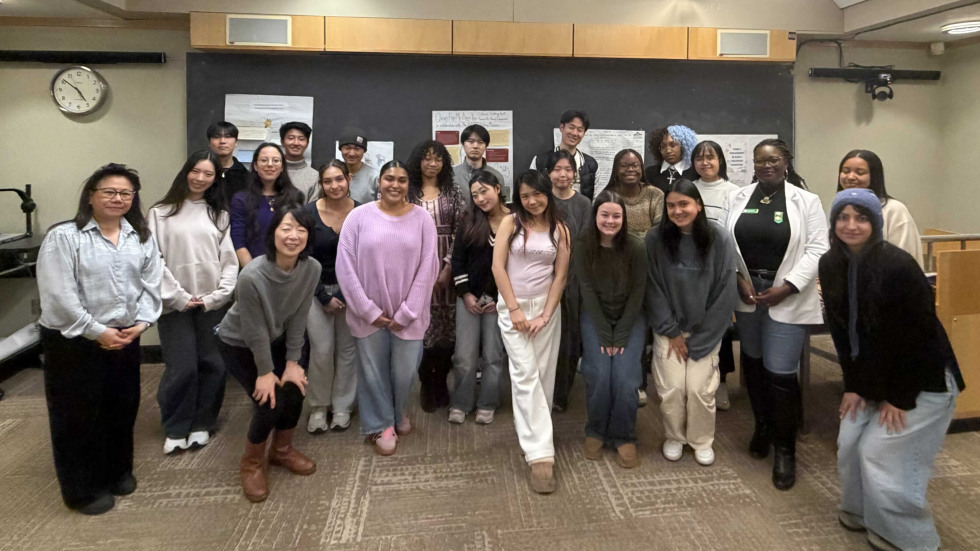
Fellowship term: Full academic yearEducation studies and sociology concentrator Ariagna Hernandez first encountered community-based learning and research as a student in HISP 0750B: The Latin American Diaspora in the U.S. and Yoko Yamamoto’s EDUC 1190: Family Engagement in Education.
Hernandez later joined Yamamoto as a CBLR Fellow for EDUC 1190 and served as a key liaison, communicating with and strengthening relationships with partner organizations; developing guidelines for group projects and community partnerships to support students' ethical and effective collaborations; and advising students on their community-based projects.
Their collaboration also looked beyond a single semester, emphasizing sustaining partnerships and creating resources that could remain useful to local organizations and future students. “This experience taught me how to facilitate relationships between students, faculty and community organizations with care and intentionality,” Hernandez said.
Building a resource designed to last
Jolie Barnard, CBLR Fellow, and Nell Lake, faculty partner
Course: ENGL 1051A: The Art of the Interview
Fellowship term: Full academic yearA Biology and IAPA double concentrator, Jolie Barnard first experienced CBLR through PHP 1821: Incarceration, Disparities, and Health, a course that allowed her to explore the intersection of healthcare and policy while thinking more critically about her relationship to the Providence community.
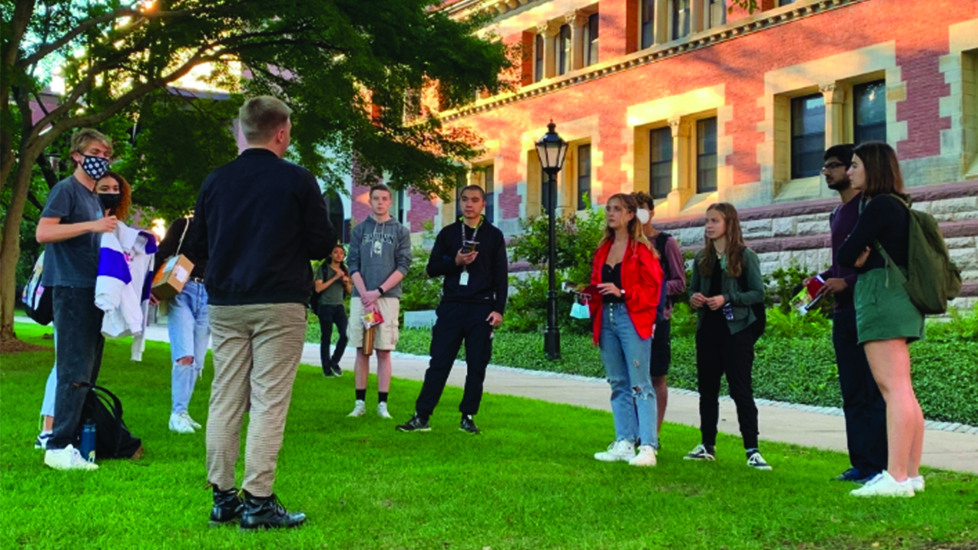
Then, as a CBLR Fellow working with Nell Lake, Barnard developed a resource to help students understand and navigate Rhode Island’s public affairs landscape as they prepared to conduct interviews beyond campus.
Barnard researched government agencies, advocacy organizations, nonprofits and other groups across the state, then used that research to develop a Google site where students could identify potential interview subjects, learn about organizations and prepare for their interviews.
The resource was designed to extend beyond a single semester. Future students can continue contributing, allowing it to grow and serve future iterations of this course and others Lake teaches.
For Barnard, the experience also offered a different way of thinking about where learning at Brown takes place. “Reframing our education at Brown as one that takes place in Providence has been eye-opening for me, and I hope to bring other students to do the same,” Barnard said.
Sustaining engagement across semesters
Stephen Ogunbiyi, CBLR Fellow, and Nancy Jacobs, faculty partner
Course: ENVS 1557: Birding Communities
Fellowship term: SpringWith interests in language, culture, and birding, Stephen Ogunbiyi first explored community-engaged learning through research in southern Nigeria and Uganda, working alongside local communities to explore connections between birds, culture, and conservation.
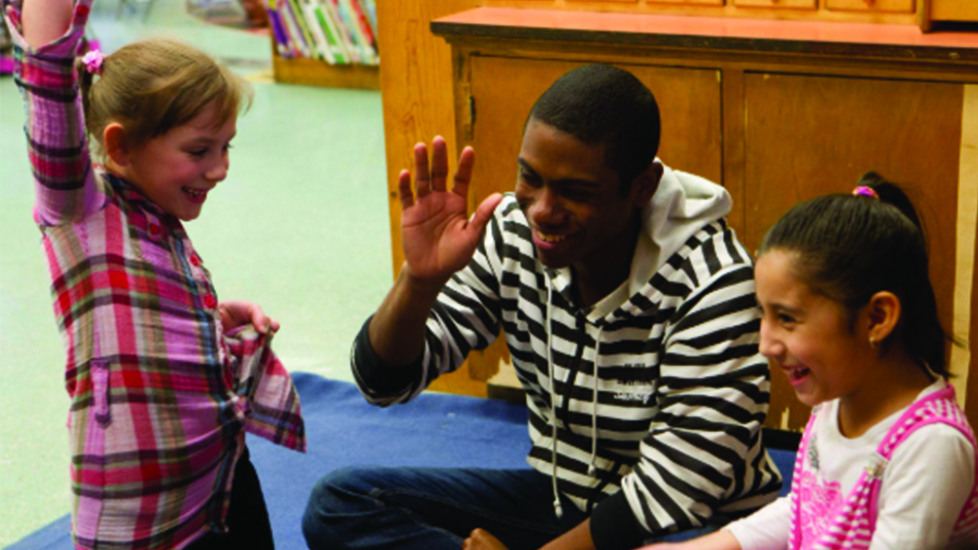
In Birding Communities, CBLR Fellow Ogunbiyi worked with Nancy Jacobs to bring Brown students and Providence schoolchildren together through an eight-week birding program.
Building on a curriculum developed with previous CBLR Fellows, Ogunbiyi helped coordinate birding clubs in Providence schools, schedule Brown student participation, plan programming and manage logistics, including transportation to local parks. He also helped maintain partnerships in preparation for the course.
The collaboration reflects a longer-term approach to community-engaged teaching. Over several years, CBLR Fellows have helped develop new partnerships and provide continuity between semesters as the course has evolved.
At the center of the course is an effort to create opportunities for mutual learning while expanding ideas about who has access to nature and can participate in birding. “I found these interactions to be incredibly valuable and vowed to find the ability to continue similar community-based work with my local community in Providence,” Ogunbiyi said.
Continuing the Work in 2026-27
The Fellowship continues this academic year across courses in the humanities, social sciences, environmental studies, education, public health and STEM. The 2026-27 faculty-Fellow partnerships include:
| AFRI: In the Wake Faculty partner: Patsy Lewis CBLR Fellow: Paola Chapilliquen | ENGL 1050: Let Me Explain (Explanatory Journalism) Faculty partner: Nell Lake CBLR Fellow: Ishita Khurana |
| ANTH 1329: The Social Lives of Data Faculty partner: Kim Fernandes CBLR Fellow: Sofia Guarisma | ENVS 1247: Clearing the Air: Environmental Studies of Pollution Faculty partners: Meredith Hastings and Scott Frickel CBLR Fellow: Theodore Pfeiffer |
| ANTH 1515: Anthropology of Mental Health Faculty partner: Katherine A. Mason CBLR Fellow: Sophia Leng | ENVS 1557: Birding Communities Faculty partner: Nancy Jacobs CBLR Fellow: Brandon You |
| BIOL 0610: Modeling Human Disease Using Stem Cells Faculty partner: Chuck Toth CBLR Fellow: Prottoy Roy | FREN 1410T: The Refugee Experience: Displacement, Migration Faculty partner: Virginia Krause CBLR Fellow: Leyan Al Dabbagh |
| CPSY: The Psychology of Doing Good Faculty partner: Ruth Colwill CBLR Fellow: Kavita Doobay | HSP 1500: Improving the Quality of Healthcare: From Measurement to Action Faculty partner: Amal Trivedi CBLR Fellow: Kenneth Kalu |
| EDUC 1185: Developmental and Educational Journeys of Students in Immigrant Families Faculty partner: Yoko Yamamoto CBLR Fellow: Ariagna Hernandez | PHP 1821: Incarceration, Disparities, & Health Faculty partner: Alex Macmadu CBLR Fellows: Noah Cohen and Rita Beyene |
| EDUC 1320: Turning Hope into Results: The Policy Ecosystem of the Providence Public Schools District Faculty partner: Emily Qazilbash CBLR Fellows: Brianna Paliz and Gabriella Miranda | SOC 1870Z: Urban Sociology: Neighborhoods, Crime, and Punishment Faculty partner: John Eason CBLR Fellow: Riya Singh |
| EDUC 1655: Human Development and Education in East Asia Faculty partner: Yoko Yamamoto CBLR Fellow: Rachel Lee |
Interested in Working With a CBLR Fellow?
Faculty interested in working with a CBLR Fellow in 2027-28 to support community partnerships, curriculum development, student preparation, or other community-engaged course elements can apply in UFunds between October 19, 2026, and February 1, 2027. Students will then apply March 1-29, 2027.
Learn more about the program via our website. With questions, contact Julie Plaut, Director of Engaged Scholarship in the Swearer Center and Adjunct Lecturer in Sociology.